
Why Product Feedback, Changelog, and Roadmap Should Live Inside Your Community

Where Should Product Feedback Live? Inside Your Community, Not a Separate Tool
I've operated in the SaaS world for almost a decade.
There was a time when SaaS companies kept three separate sections on their website:
Product feedback: a widget or a form for customers to submit feature requests and bug reports.
Product roadmap: a dedicated page for planned features and their ETAs.
Changelog: a page showing a log of recently released features.
Around 2017 and 2018, dedicated tools took over. They offered an all-in-one solution to collect feedback, publish a roadmap and post a changelog from one place. I'm talking about Canny, Featurebase, Upvoty, UserVoice, Frill and a dozen others.
Before I founded Jatra, I worked at a startup as their Head of Growth. We used Canny to collect feedback from our customers.
The problem with feedback, changelog and roadmap tools
On setup day, Canny looked like the perfect solution. Then real user behavior showed up, and it told a different story.
We were building a dedicated customer community at the time. People would share feedback right there, in the middle of a conversation. And every time, we had to stop them and say, great, now go to feedback.our-domain.com and submit it there.
...very few actually did that.
So, what did we do? Our product manager started creating the feedback entries himself, on the customer's behalf. He'd read a thread, then go and re-type the request into Canny so it wouldn't get lost.
No one followed our roadmap. No one checked our changelog. Every time, we had to point people to a subdomain they didn't want to visit. And no one liked it.
A feature request is worthless without the conversation behind it
Look at what that setup actually cost us.
The entries our PM copied into Canny were stripped of everything that made them useful. A one-line title and a vote count. The original question, gone. The workaround another customer had posted in the same thread, gone. The three other people who said "yes, I need this too" in slightly different words, gone, so they never got counted as the same request.
In the community thread, all of that lived together. In Canny, it became a title and a number.
When your product team reads a feature request as a title and a number, they're guessing. When they read the thread it came from, they understand the problem. That gap is the whole game.
Nobody visits a roadmap or a changelog that lives somewhere else
The roadmap and changelog had the same disease.
A roadmap sitting on its own page, on a subdomain, is a page people visit zero times. They don't bookmark it. They don't check back. When they want to know whether you're building something, they open a support ticket and ask, and the reply you write helps exactly one person.
The changelog was worse. We shipped good things and announced them into the void. Most customers never saw the post. The ones who did saw "we shipped X" with no memory of the conversation that led to X.
Put the roadmap and changelog where people already are, inside the community, and they get seen without anyone having to go anywhere. And a changelog post can link straight back to the feedback thread it came from. Someone raised it, people discussed it, you built it, you shipped it, and the changelog closes the loop right back to the start. The customer who asked for it gets to watch their idea go all the way through. Try manufacturing that kind of goodwill any other way.
The part that cost us the most: nobody could find any of it
There's one more problem with a feedback subdomain that I didn't fully appreciate until later.
All of that content was invisible.
Every question a customer asked, every workaround, every "does it support X," that is exactly what your next buyer is typing into Google and into ChatGPT right now. Buyers do most of their research on their own these days, long before they ever talk to sales. 6sense reported that around 81% of B2B buyers already have a favorite picked before the first sales call.
So the only thing that matters is what they find when they go looking. Our feedback lived on a subdomain that wasn't built to be found, behind a tool that wasn't built to rank. It helped nobody outside the handful of customers who bothered to log in.
A public community thread does the opposite. It answers a real question, it gets indexed, and it keeps pulling people in long after the conversation itself is over.
When a separate feedback tool still makes sense
I'm not going to pretend Canny and the rest are bad products. They're not.
Frankly, if you're a large product org with hundreds of requests a week, a serious prioritization process and a product-ops person whose actual job is managing all of it, a dedicated tool earns its keep. The heavy voting and the structured boards are useful at that scale.
But most companies, especially early on, aren't there. They don't need a voting machine on a subdomain. They need their customers' feedback, questions and ideas to stay where the conversation already is.
What I built instead
When I started building Jatra, that whole Canny experience was sitting right in front of me.
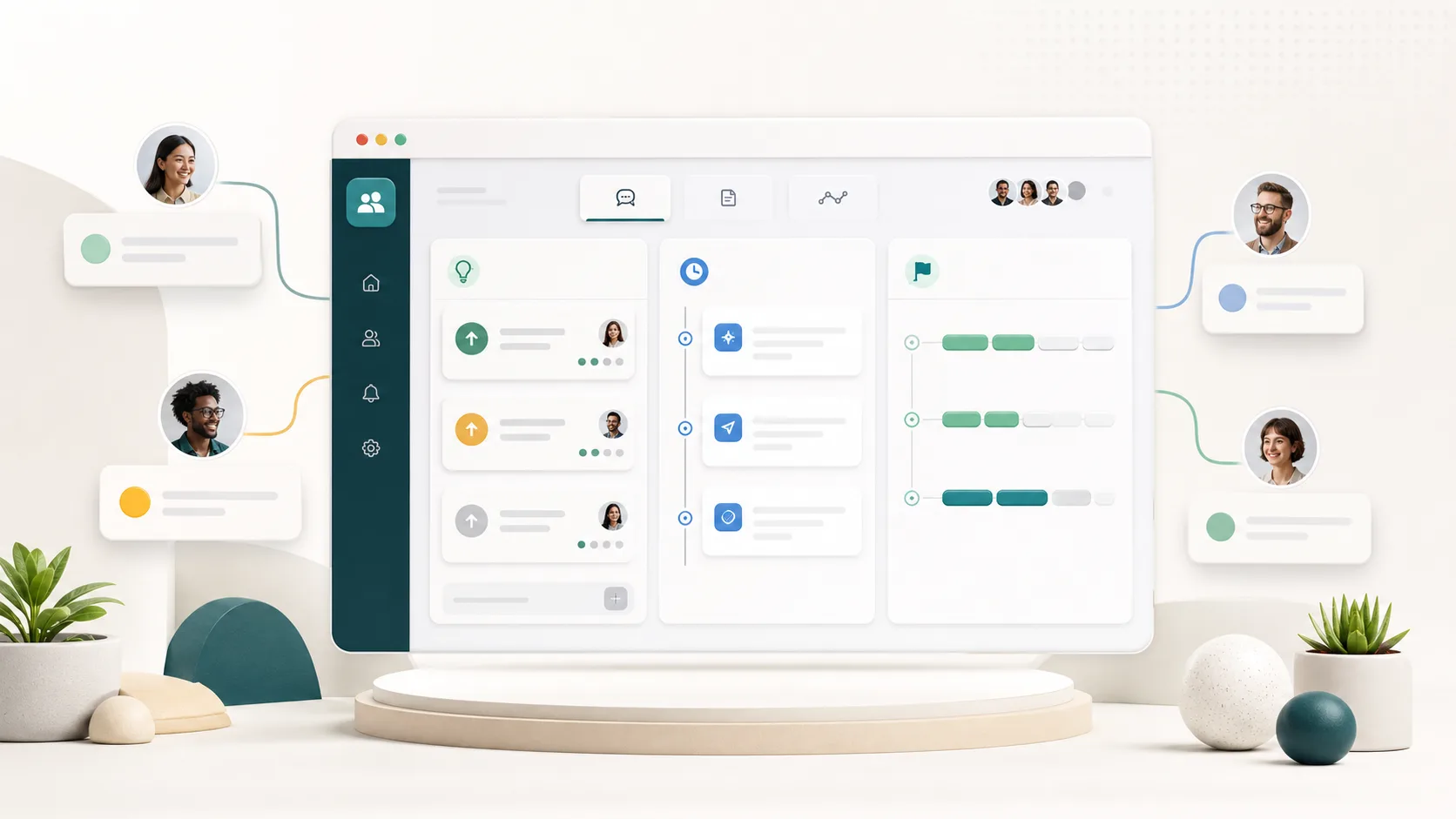
So in Jatra, feedback, roadmap and changelog aren't separate tools. They're post types inside the community itself. A customer shares an idea in the same place they're already talking. No subdomain. No "go submit it over there." It's public by default and built so Google and the AI crawlers can read it, which means the threads that answer real questions actually show up when people search.
The customer's voice ends up doing marketing for you, instead of rotting in a database nobody opens.
Is this right for you?
Put feedback inside your community if:
customers keep sharing ideas in conversations, not in your feedback form
you find yourself copying their requests into a separate tool by hand
nobody visits your roadmap or your changelog
you want those threads to be found in search and by AI tools
you're tired of bouncing people to a subdomain they don't like
Stick with a dedicated tool if you already run a mature, high-volume feedback operation with a real prioritization process and a team that lives inside that software all day. If it's working, leave it alone.
One last thing
The feedback our PM hand-copied into Canny is still my favorite example of what goes wrong here. We were paying for a tool, and then paying a person to feed the tool, just to keep our customers' ideas in a place those same customers wouldn't visit.
Feedback, roadmap and changelog don't belong off on their own. They belong where your customers already are.